

When it comes to maintaining the performance and safety of tricycles, one common issue that riders might encounter is a bent rim. A bent rim can lead to various problems, such as uneven tire wear, poor handling, and even potential tire leaks. As a tricycle tire sealant supplier, I often receive inquiries about whether our sealant can work effectively on tires with a bent rim. In this blog post, I'll delve into this topic, exploring the science behind tire sealants, the impact of a bent rim, and whether our tricycle tire sealant can be a solution.
Understanding Tricycle Tire Sealant
Tricycle tire sealant is a liquid substance designed to prevent and repair punctures in tires. It is typically injected into the tire through the valve stem and coats the inner surface of the tire. When a puncture occurs, the sealant is forced into the hole by the tire's air pressure, where it forms a plug that seals the puncture and prevents air from escaping.
The effectiveness of a tire sealant depends on several factors, including the type of sealant, the size and type of puncture, and the condition of the tire. Most sealants are designed to work on small punctures, such as those caused by nails or screws. They may not be as effective on larger punctures or cuts, especially if the damage is severe.
Our Tricycle Tire Sealant is formulated with advanced polymers and fibers that provide excellent sealing properties. It can quickly and effectively seal punctures up to a certain size, helping to keep the tire inflated and the tricycle safe to ride.
The Impact of a Bent Rim
A bent rim can have a significant impact on the performance and safety of a tricycle. When a rim is bent, it can cause the tire to sit unevenly on the rim, leading to uneven tire wear. This can reduce the lifespan of the tire and increase the risk of a blowout.
In addition, a bent rim can also affect the handling of the tricycle. It can cause the tricycle to pull to one side, making it more difficult to steer and control. This can be especially dangerous at high speeds or when riding on uneven surfaces.
Another potential problem with a bent rim is that it can create gaps between the tire and the rim, allowing air to escape. This can lead to slow leaks or even sudden deflation, leaving the rider stranded.

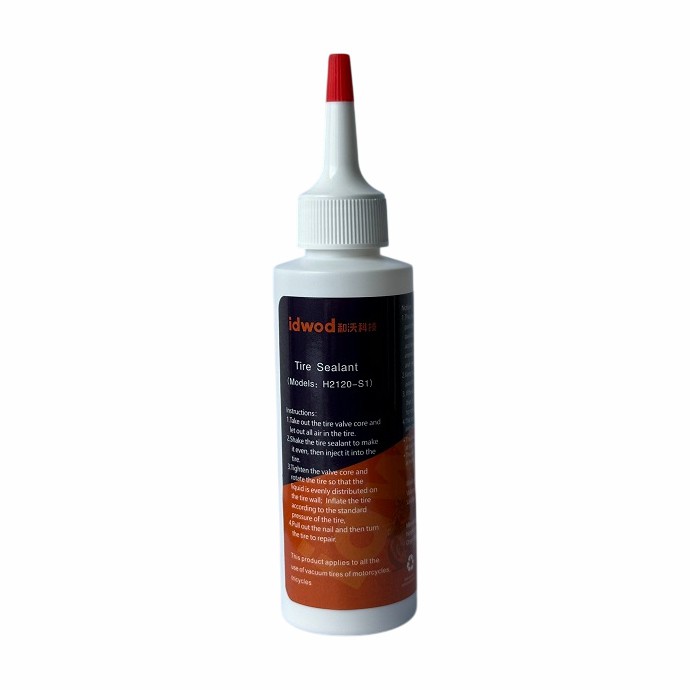
Can Tricycle Tire Sealant Work on Tires with a Bent Rim?
The answer to this question is not straightforward. In some cases, tricycle tire sealant may be able to help seal small leaks caused by a bent rim. If the gap between the tire and the rim is small, the sealant may be able to fill the gap and prevent air from escaping.
However, if the rim is severely bent, the sealant may not be able to provide a permanent solution. A severely bent rim can cause the tire to be deformed, making it difficult for the sealant to form a proper seal. In addition, the constant movement and vibration of the tricycle can cause the sealant to break down over time, leading to further leaks.
It's also important to note that using tire sealant on a tire with a bent rim is not a substitute for repairing or replacing the rim. While the sealant may provide a temporary fix, it's still necessary to address the underlying issue of the bent rim to ensure the long-term safety and performance of the tricycle.
When to Use Tricycle Tire Sealant on a Tire with a Bent Rim
If you have a tricycle with a slightly bent rim and are experiencing a slow leak, you may want to consider using our tricycle tire sealant as a temporary solution. Here are some steps to follow:
- Inspect the rim and tire: Before using the sealant, carefully inspect the rim and tire for any signs of damage. If the rim is severely bent or the tire is damaged beyond repair, it's best to replace the rim or tire.
- Prepare the tire: Remove the valve core from the tire valve stem to allow the sealant to be injected more easily. You may also want to clean the inside of the tire to ensure that the sealant adheres properly.
- Inject the sealant: Follow the instructions on the sealant bottle to inject the appropriate amount of sealant into the tire. Be sure to shake the bottle well before use to ensure that the sealant is evenly mixed.
- Reinstall the valve core: Once the sealant has been injected, reinstall the valve core and inflate the tire to the recommended pressure.
- Test the tire: After inflating the tire, check for any signs of leakage. If the leak has stopped, you can continue to use the tricycle, but it's still important to have the rim repaired or replaced as soon as possible.
Other Applications of Tire Sealant
While our tricycle tire sealant is designed specifically for tricycles, it can also be used on other types of vehicles. For example, our Electric Motorcycle Tire Sealant is formulated to meet the unique needs of electric motorcycles, providing excellent sealing properties and long-lasting protection.
In addition, our Car Tire Sealant is suitable for cars and other passenger vehicles. It can help prevent and repair punctures, reducing the risk of flat tires and keeping you safe on the road.
Conclusion
In conclusion, while tricycle tire sealant may be able to provide a temporary solution for small leaks caused by a bent rim, it's not a substitute for repairing or replacing the rim. If you have a tricycle with a bent rim, it's important to have it inspected by a professional and repaired or replaced as soon as possible to ensure the safety and performance of your tricycle.
If you're interested in learning more about our tricycle tire sealant or other tire sealant products, please don't hesitate to contact us. We're here to help you find the right solution for your needs and ensure that your tires stay inflated and your vehicles stay safe on the road.
References
- "Tire Sealant Basics." Tire Industry Association.
- "How to Fix a Bent Rim." Popular Mechanics.
- "The Benefits of Using Tire Sealant." Consumer Reports.