

Radial tires have become the standard for most vehicles on the road today, from cars and trucks to bicycles and tricycles. Their design offers numerous advantages, including better fuel efficiency, improved handling, and longer tread life. However, like all tires, they are susceptible to punctures and leaks. This is where tire sealant comes in. As a tire sealant supplier, I often get asked the question: Does tire sealant work on radial tires? In this blog post, I'll explore this topic in detail and provide you with the information you need to make an informed decision.
How Radial Tires Work
Before we dive into the effectiveness of tire sealant on radial tires, it's important to understand how radial tires are constructed. Radial tires have a unique design where the cords in the tire's carcass run radially from bead to bead, perpendicular to the direction of travel. This design provides several benefits, such as a more flexible sidewall, better traction, and improved ride comfort.

The tread of a radial tire is reinforced with belts made of steel, nylon, or other materials. These belts help to distribute the weight of the vehicle evenly across the tire's surface, reducing wear and tear and improving handling. The sidewalls of a radial tire are also designed to be more flexible, which allows them to absorb shocks and bumps in the road.
How Tire Sealant Works
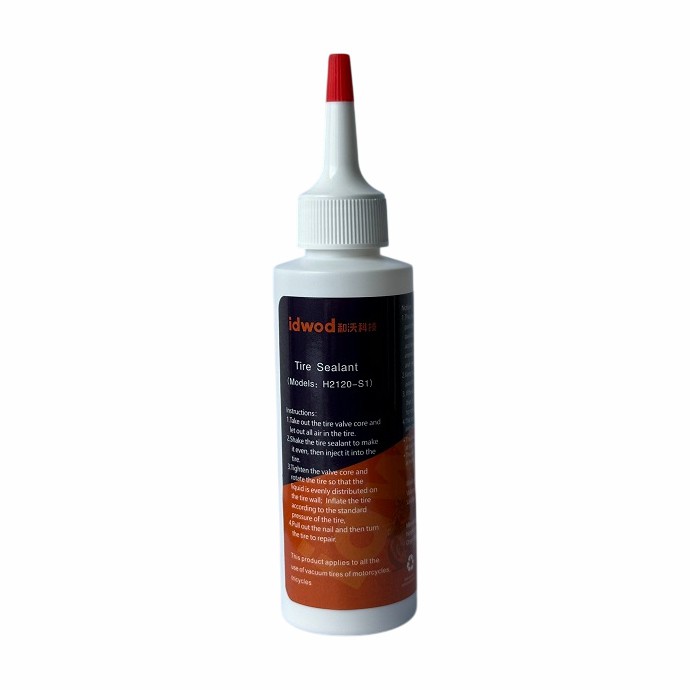
Tire sealant is a liquid substance that is injected into the tire through the valve stem. When a puncture occurs, the sealant is forced into the hole by the pressure inside the tire. The sealant then dries and hardens, creating a plug that seals the puncture and prevents air from escaping.
There are two main types of tire sealant: latex-based and synthetic-based. Latex-based sealants are made from natural rubber and are biodegradable. They are typically used in bicycle and motorcycle tires. Synthetic-based sealants are made from a variety of chemicals and are more durable than latex-based sealants. They are typically used in car and truck tires.
Does Tire Sealant Work on Radial Tires?
The short answer is yes, tire sealant can work on radial tires. However, the effectiveness of the sealant depends on several factors, such as the size and location of the puncture, the type of sealant used, and the condition of the tire.
Size and Location of the Puncture
Tire sealant is most effective at sealing small punctures, such as those caused by nails, screws, or thorns. Punctures that are larger than 1/4 inch in diameter may be too large for the sealant to seal effectively. In addition, punctures that are located in the sidewall of the tire may be more difficult to seal than punctures that are located in the tread.
Type of Sealant Used
As mentioned earlier, there are two main types of tire sealant: latex-based and synthetic-based. Latex-based sealants are typically more effective at sealing small punctures in bicycle and motorcycle tires. Synthetic-based sealants are more durable and are better suited for car and truck tires.
When choosing a tire sealant, it's important to choose one that is compatible with your tire. Some sealants may damage the tire's inner liner or cause the tire to lose its balance. It's also important to follow the manufacturer's instructions when using the sealant.
Condition of the Tire
The condition of the tire also plays a role in the effectiveness of the sealant. If the tire is old or worn, the sealant may not be able to seal the puncture effectively. In addition, if the tire has been damaged or has a leaky valve stem, the sealant may not be able to prevent air from escaping.
Benefits of Using Tire Sealant on Radial Tires
Using tire sealant on radial tires offers several benefits, including:
- Convenience: Tire sealant can save you time and hassle by allowing you to seal a puncture on the spot. You don't have to worry about changing a flat tire on the side of the road or waiting for a tow truck.
- Cost Savings: Using tire sealant can save you money by extending the life of your tires. By sealing small punctures, you can prevent them from becoming larger and causing more damage to the tire.
- Safety: Tire sealant can help to prevent blowouts and other tire-related accidents. By sealing punctures quickly, you can maintain the integrity of the tire and reduce the risk of a flat tire while driving.
Drawbacks of Using Tire Sealant on Radial Tires
While using tire sealant on radial tires offers several benefits, there are also some drawbacks to consider, including:
- Limited Effectiveness: Tire sealant is most effective at sealing small punctures. It may not be able to seal larger punctures or damage to the sidewall of the tire.
- Messy: Tire sealant can be messy to apply and clean up. If the sealant gets on your hands, clothes, or car, it can be difficult to remove.
- Compatibility Issues: Some tire sealants may not be compatible with certain types of tires or wheels. It's important to choose a sealant that is specifically designed for your tire and wheel.
Types of Tire Sealant for Radial Tires
As a tire sealant supplier, I offer a variety of tire sealants for radial tires, including Mountain Bike Tire Sealant, Car Tire Sealant, and Tricycle Tire Sealant. Each of these sealants is designed to meet the specific needs of different types of vehicles and tires.
- Mountain Bike Tire Sealant: Our mountain bike tire sealant is a latex-based sealant that is designed to seal small punctures in bicycle tires. It is biodegradable and safe for the environment.
- Car Tire Sealant: Our car tire sealant is a synthetic-based sealant that is designed to seal small punctures in car and truck tires. It is durable and long-lasting.
- Tricycle Tire Sealant: Our tricycle tire sealant is a latex-based sealant that is designed to seal small punctures in tricycle tires. It is easy to apply and clean up.
Conclusion
In conclusion, tire sealant can work on radial tires, but its effectiveness depends on several factors, such as the size and location of the puncture, the type of sealant used, and the condition of the tire. Using tire sealant on radial tires offers several benefits, including convenience, cost savings, and safety. However, there are also some drawbacks to consider, such as limited effectiveness, messiness, and compatibility issues.
As a tire sealant supplier, I recommend that you choose a sealant that is specifically designed for your tire and wheel. It's also important to follow the manufacturer's instructions when using the sealant. If you have any questions or concerns about using tire sealant on your radial tires, please don't hesitate to contact me. I'm here to help you find the right solution for your needs.
If you're interested in purchasing our tire sealants for your radial tires, we welcome you to reach out for a procurement discussion. We can provide you with more detailed information, sample products, and competitive pricing.
References
- "Tire Sealant: How It Works and When to Use It." Consumer Reports, https://www.consumerreports.org/tire-sealant/how-it-works-and-when-to-use-it/.
- "Radial Tires: Everything You Need to Know." Firestone Complete Auto Care, https://www.firestonecompleteautocare.com/tire-care/radial-tires/.
- "How to Use Tire Sealant." Goodyear, https://www.goodyear.com/en-US/tire-care/how-to-use-tire-sealant.